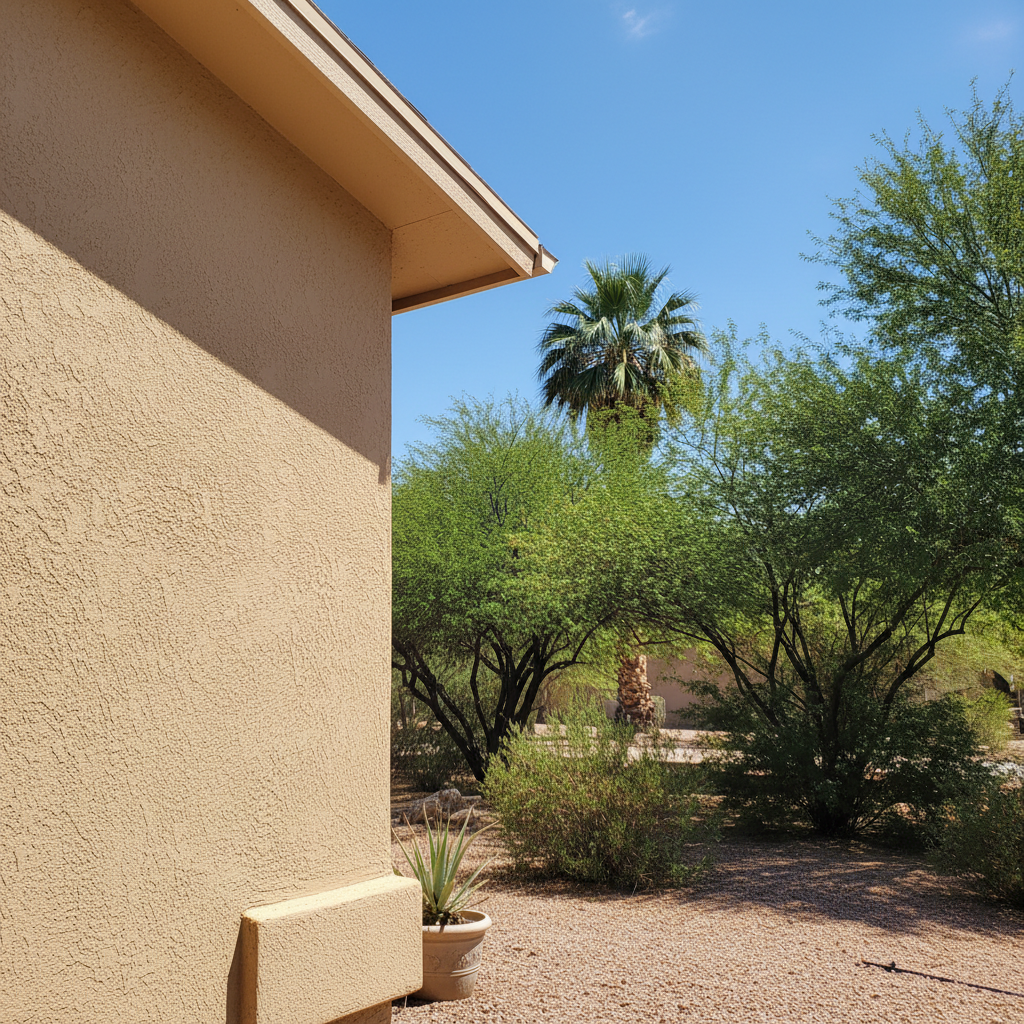
You’ve got stucco on your home here in Glendale, right? Good choice. It’s tough, looks great, and handles our Arizona sun like a champ. But just because it’s tough doesn’t mean you can just ignore it. I’ve seen too many folks neglect their stucco, only to end up with bigger, costlier problems later on. You wouldn’t skip oil changes on your truck, would you? Same idea here.
Extending the Life of Your Stucco Finish
So, how do you make sure your stucco lasts as long as it should, maybe even longer? It’s not rocket science, but it does take a little attention. First off, water is your number one enemy, even in the desert. We don't get a lot of rain, sure, but when we do, or when you're watering your plants, you need to make sure that water isn't just sitting against your stucco.
That means keeping your sprinklers aimed away from the walls. I see it all the time, especially in older neighborhoods like those around Maryland Avenue, where sprinklers are just blasting the side of a house every morning. That constant moisture can lead to efflorescence, staining, and eventually, softening of the stucco. Make sure your gutters and downspouts are clean, too, and directing water well away from your foundation. If water pools near the base of your walls, you’ve got a problem that needs fixing, usually with some grading work.
Another big one is paint. If your stucco is painted, a good quality, breathable elastomeric paint can add years to its life. It gives an extra layer of protection against our intense UV rays and those rare but heavy monsoon downpours. Just make sure it’s applied correctly; you don’t want to trap moisture behind it, that's for sure.
Regular Maintenance: What You Need to Do
You don't need to be a stucco expert to do a quick check-up. I tell my clients to walk around their house at least twice a year. Once before summer really kicks in, and once after monsoon season. Here’s what you’re looking for:
- Visual Inspection: Just look at it, really look. Are there any obvious cracks? Stains? Discoloration? Is anything peeling or flaking? Pay extra attention around windows, doors, and where different materials meet, like where stucco meets trim or the foundation. These are often the first places problems show up.
- Cleanliness: Stucco can get dirty, especially with dust storms and general grime. A gentle wash with a garden hose and a soft brush can do wonders. For tougher stains, a mild detergent and water solution works. Just don't use a high-pressure washer too close; you can damage the finish, and nobody wants that.
- Caulking Check: The caulk around windows, doors, and penetrations (like pipes or electrical boxes) is crucial. It’s your first line of defense against water intrusion. If it’s cracked, shrunken, or missing, it needs to be replaced. This is a pretty easy DIY fix for most homeowners.
Warning Signs of Stucco Problems
Alright, so what are the red flags that tell you something’s gone wrong? You gotta know what to look for.
- Cracks: Not all cracks are bad. Hairline cracks are pretty normal with stucco as the house settles and expands/contracts with our temperature swings. But if you see cracks that are wider than a credit card, or if they’re running in a spiderweb pattern, or if they’re horizontal and long, those are definitely concerning. They can indicate structural movement or water damage underneath.
- Stains and Discoloration: Dark streaks, especially below windows or along the foundation, often mean water is getting in somewhere. Green or black spots could be mold or mildew, which means constant moisture. Rust stains might indicate failing metal lath or fasteners behind the stucco.
- Bulging or Soft Spots: If you press on the stucco and it feels soft, spongy, or if it sounds hollow when you tap it, that’s a big problem. It usually means moisture has gotten behind the stucco and is damaging the substrate underneath. This is serious and needs immediate attention.
- Peeling Paint or Finish: If the paint or the top coat of your stucco is peeling, bubbling, or flaking off, it’s often a sign of moisture trapped behind it trying to escape.
When to Call a Professional
Look, I’m all for homeowners doing what they can. But there are times when you just need to call in the pros. If you see any of those serious warning signs I just mentioned – wide cracks, bulging, soft spots, significant water staining that doesn't go away – don’t wait. The longer you put it off, the worse and more expensive the repair will be.
Also, if you're not comfortable getting on a ladder to inspect higher areas, or if you just don't know what you're looking at, that's what we're here for. A professional stucco inspection from a local company like Glendale Stucco Solutions can identify issues you might miss and give you a clear picture of your stucco's health. We can tell you if that crack is just cosmetic or if it's a sign of something bigger. Sometimes, a small repair now saves you from a full re-dash later. It’s just good to know, isn't it?
Taking care of your stucco isn't a huge chore, but it's an important one. A little proactive maintenance goes a long way in protecting your investment and keeping your home looking sharp for years to come.